The Art of Balinese Offerings: Canang Sari and Canang Kuangen
In Bali, daily life is closely connected to spirituality, gratitude, and harmony with nature. One of the most recognizable expressions of this tradition is the canang, a small offering made from young coconut leaves, flowers, and other symbolic elements. These offerings are an essential part of Balinese Hindu culture and can be seen throughout the island—in homes, temples, businesses, and sacred spaces.
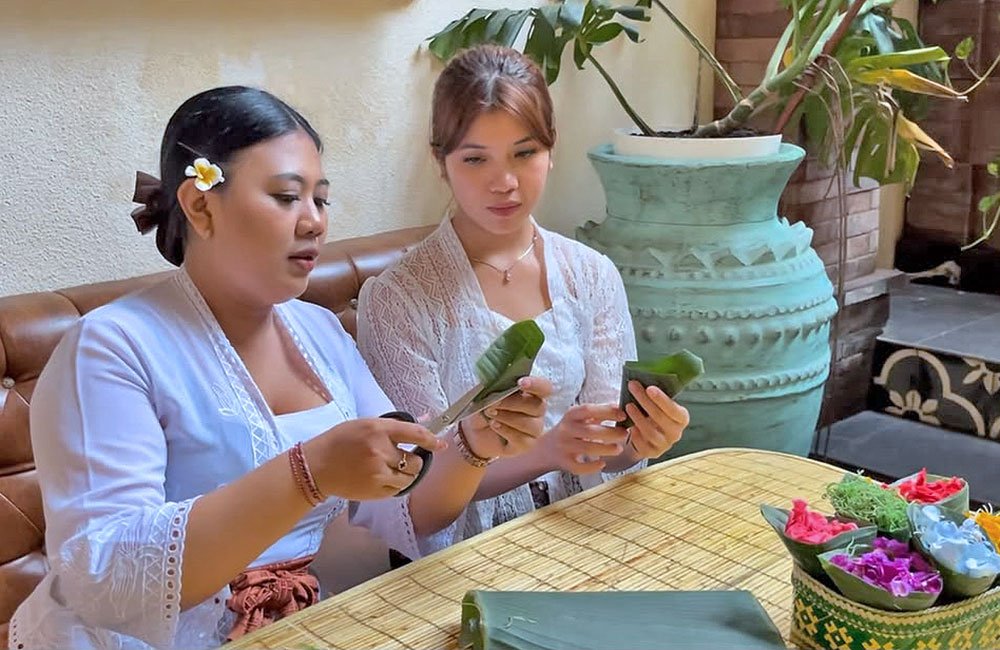
The word canang refers to a handmade offering basket, traditionally crafted from woven young coconut leaves. Each component placed inside the offering carries a symbolic meaning, representing balance, gratitude, and respect toward God, nature, and all living beings. The preparation of canang is considered both an art and a spiritual practice, requiring patience, mindfulness, and devotion.
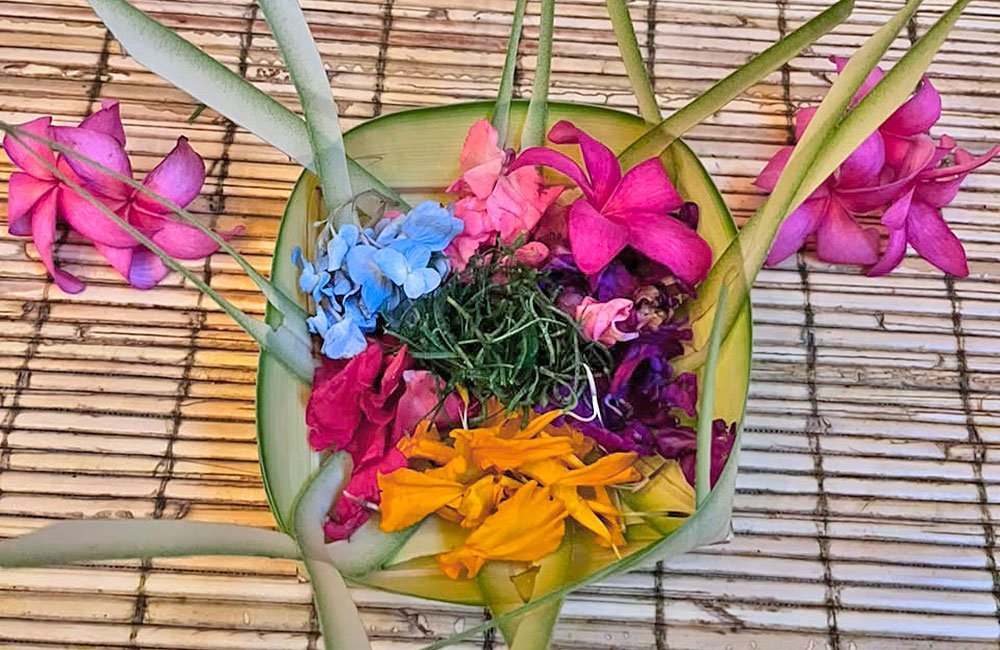
Among the many types of Balinese offerings, Canang Sari is the most common and widely recognized. Offered daily, it serves as a gesture of gratitude for the blessings of life. Canang Sari typically consists of colorful flowers arranged according to sacred directions, along with symbolic items such as betel leaves, lime, and incense. Once completed, the offering is placed in shrines, family temples, workplaces, or entrances as a daily prayer of thankfulness and harmony.
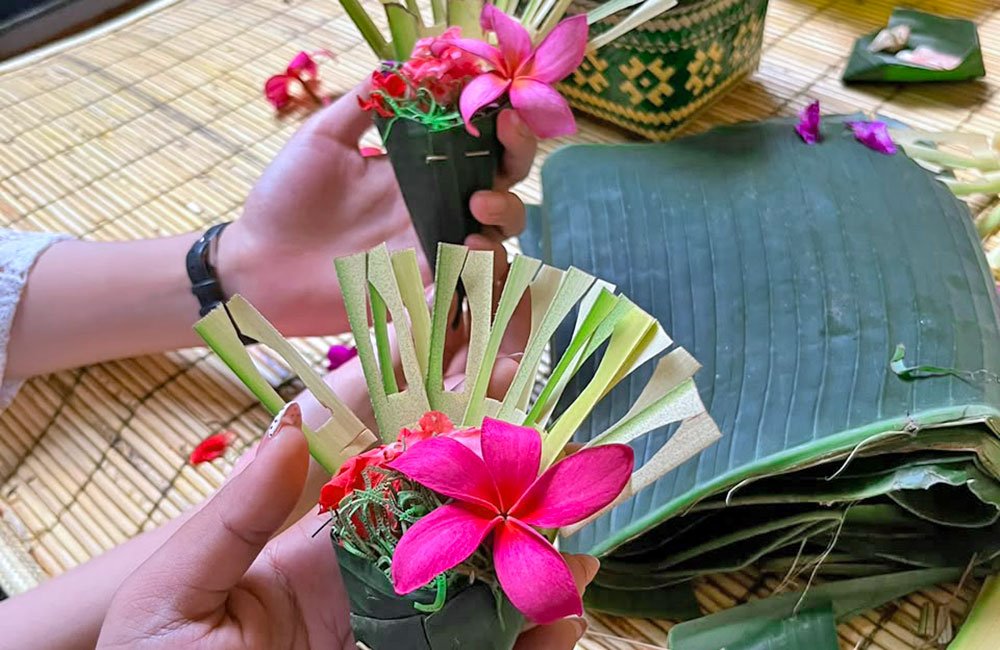
Another important offering is Canang Kuangen, which is often used during religious ceremonies and special occasions. While similar in appearance to Canang Sari, Canang Kuangen contains additional symbolic elements that represent sincerity, devotion, and a deeper spiritual connection. The word kuangen is derived from the Balinese word meaning “longing” or “yearning,” symbolizing the human desire to connect with the divine. Because of its significance, Canang Kuangen is frequently included in temple ceremonies, blessings, and important religious rituals.
The creation of both Canang Sari and Canang Kuangen reflects the Balinese philosophy of maintaining harmony between humanity, nature, and the spiritual world. Every fold of the coconut leaf, every flower petal, and every carefully placed element carries a meaning that has been passed down through generations.
Today, the tradition of making canang remains an important part of Balinese cultural identity. Learning to create these offerings provides a unique opportunity to understand the island’s values, artistry, and spiritual heritage, while experiencing a meaningful tradition that continues to shape daily life in Bali.